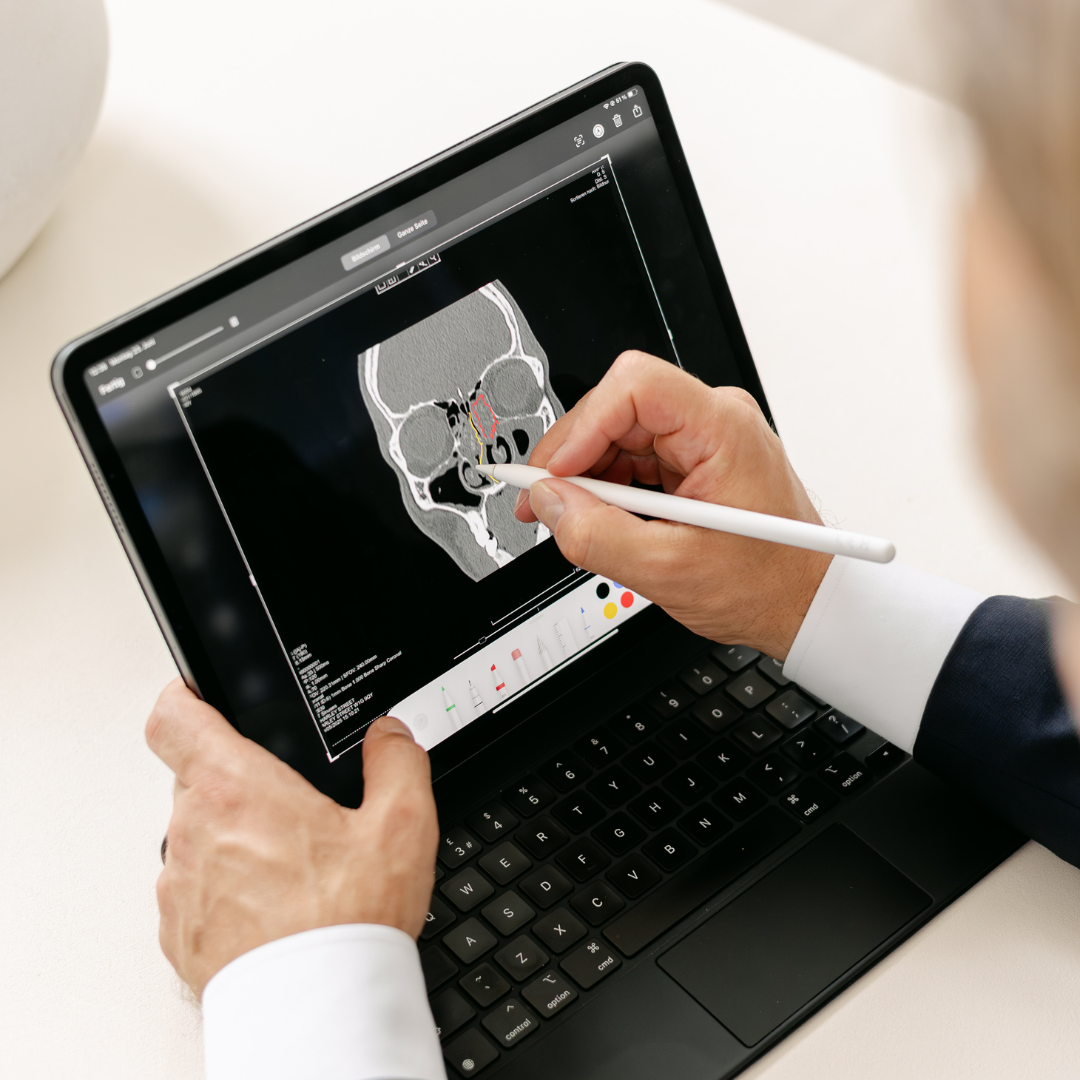
What Happens to the Bone After Rhinoplasty?
Medically reviewed by Mr Florian Bast
Consultant ENT Surgeon and Facial Plastic Surgeon
Professional profiles: LinkedIn | GMC
This article reflects current understanding at the time of publication.
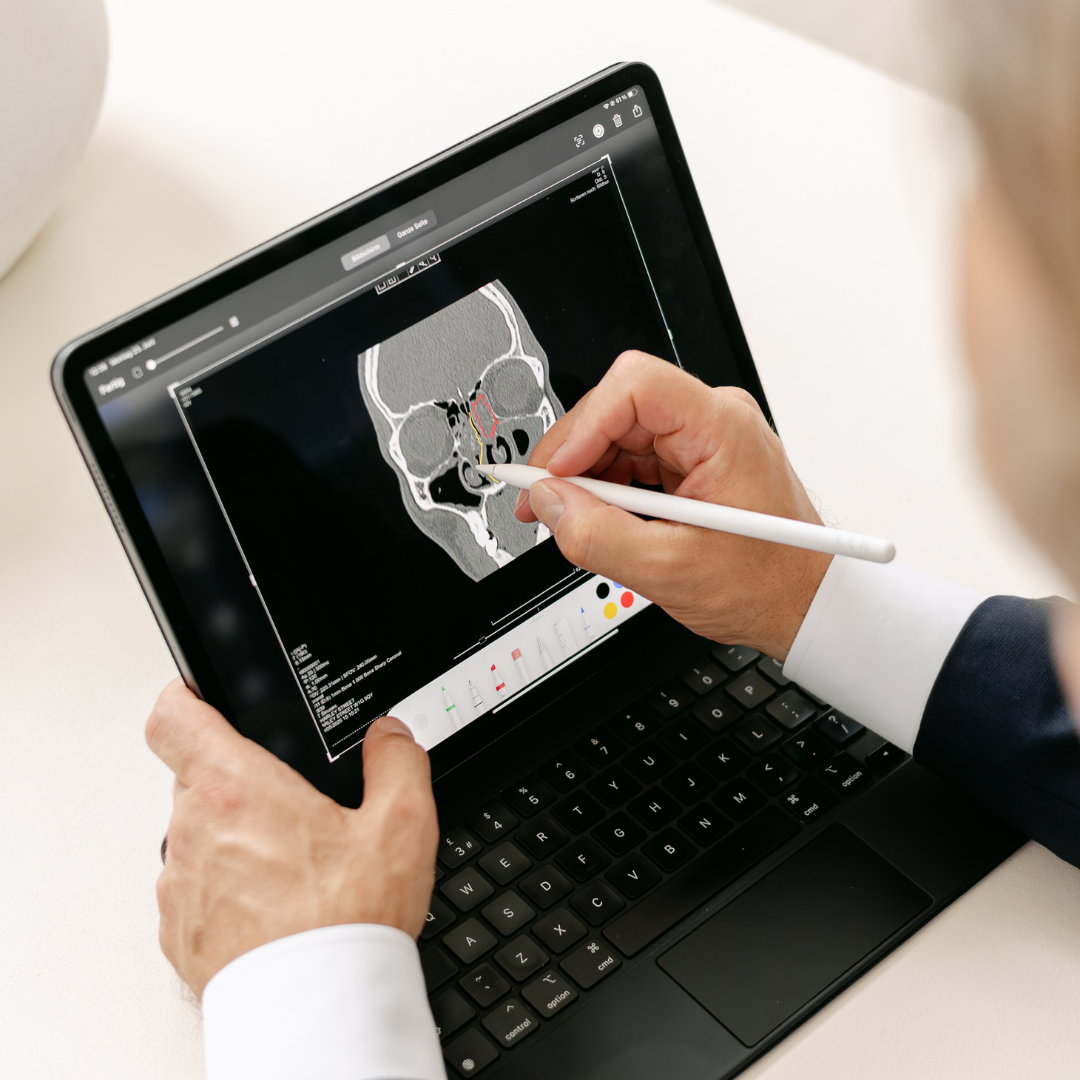
Key Things You Will Learn in This Blog
Why the nasal bones are repositioned during Rhinoplasty
How the nasal bones heal after surgery
What happens after the splint is removed
Why protecting your nose during recovery is essential
How long bone healing and Rhinoplasty recovery take
After Rhinoplasty, many patients are surprised to learn that healing continues long after the splint has been removed. While swelling is often the most visible part of recovery, the nasal bones and supporting structures are also healing beneath the surface.
During Rhinoplasty Surgery, the nasal bones may be carefully repositioned to create a straighter, more balanced appearance. This is a normal part of many procedures, particularly when correcting a crooked nose, reducing a dorsal hump, or improving facial harmony.
But what happens to the bone once the surgery is complete?
In this blog, Mr Florian Bast, Consultant ENT Surgeon and Facial Plastic Surgeon, explains how the nasal bones heal after Rhinoplasty, why protecting your nose during recovery is so important, and what patients can expect in the weeks and months following surgery.
Why Are the Nasal Bones Moved or reshaped During Rhinoplasty?
Not every Rhinoplasty involves changing the nasal bones, but in many cases they are carefully repositioned or altered to improve both the appearance and structure of the nose.
This may be recommended to:
Straighten a crooked nose
Reduce the appearance of a prominent dorsal hump
Create better facial balance
Narrow a wide nasal bridge
Restore symmetry following injury or previous surgery
The aim is always to create a natural result that complements the patient's facial features while maintaining the strength and function of the nose.
Immediately After Surgery: Protecting the Bones
Once surgery is complete, the nasal bones are held in their new position using a protective splint. This keeps the bones stable while the early stages of healing begin.
At this point, the bones are not yet fully healed. Although they have been carefully repositioned, they remain vulnerable to movement if the nose is knocked or placed under pressure.
This is one of the main reasons patients are advised to avoid touching the nose unnecessarily and to follow their post-operative instructions carefully.
The First Few Weeks: Early Bone Healing
After the splint is removed, many patients assume that the nose has finished healing. In reality, recovery is only just beginning.
During the first few weeks:
The nasal bones begin to join together in their new position.
Swelling gradually starts to reduce.
The surrounding soft tissues continue to recover.
The nose becomes increasingly stable.
Although patients often notice a significant improvement in appearance during this stage, the internal healing process is still underway.
The Following Months: Bone Remodelling Continues
Over the next several months, the nasal bones continue to strengthen as the body remodels the healing tissue.
This is a natural process that helps the bone regain its long-term stability.
At the same time:
Swelling continues to improve.
The nasal tip becomes more refined.
The skin gradually adapts to the new framework.
The overall shape becomes more defined.
This gradual healing explains why the final result from Rhinoplasty is usually assessed around 12 months after surgery.
Why Protecting Your Nose Is So Important
Although you may feel well within a few weeks, the nasal bones are still healing.
For this reason, Mr Florian Bast advises patients to avoid:
Contact sports
Heavy knocks to the nose
Wearing heavy glasses if advised
Sleeping face down
Any unnecessary pressure on the nose during the early recovery period
Following these recommendations helps reduce the risk of disrupting the healing process and supports the best possible outcome.
Does the Bone Become Strong Again?
Yes. In the vast majority of patients, the nasal bones heal successfully and regain their strength.
Like any broken or repositioned bone, healing takes time. While the bones gradually become stronger over the following months, subtle internal remodelling continues long after the visible swelling has settled.
This is one of the reasons patience is such an important part of Rhinoplasty recovery.
What Else Is Healing After Rhinoplasty?
Bone healing is only one part of the recovery process.
The cartilage, skin, soft tissues, and internal lining of the nose are also recovering. Together, these structures continue to settle and adapt, gradually revealing the final result.
This is why healing doesn't stop when the splint comes off—it continues beneath the surface for many months.
Why Expertise Matters
Understanding how the nasal bones heal is an important part of planning successful Rhinoplasty.
Mr Florian Bast combines decades of experience in Facial Plastic Surgery with specialist expertise in ENT and Rhinology. His anatomy-led approach focuses on preserving the strength, function, and long-term stability of the nose while achieving natural-looking results that complement each patient's facial features.
Every surgical plan is tailored to the individual, ensuring careful bone repositioning, structural support, and detailed aftercare guidance throughout the healing process.
Mr Florian Bast a Facial Plastic Surgeon in London

Mr Florian Bast is a Consultant ENT Surgeon and Facial Plastic Surgeon in London with decades of experience in Rhinology, Rhinoplasty Surgery, Functional Rhinoplasty, and complex nasal reconstruction. His anatomy-led approach combines a detailed understanding of the nasal bones, cartilage, breathing function, and facial balance, allowing each procedure to be planned around the individual patient. From correcting a crooked nose or dorsal hump to restoring structure after injury or previous surgery, Mr Bast focuses on natural-looking, stable results and carefully guided Rhinoplasty Recovery.
Key Takeaways
In many Rhinoplasty procedures, the nasal bones are carefully repositioned to improve the shape and balance of the nose.
A splint helps keep the bones stable during the early stages of healing.
Bone healing begins immediately after surgery but continues for several months.
Although the splint is removed after around a week, the nose remains vulnerable while healing continues.
Avoiding knocks, contact sports, and unnecessary pressure on the nose is essential during recovery.
The final Rhinoplasty result develops gradually as both the bones and surrounding tissues continue to heal.