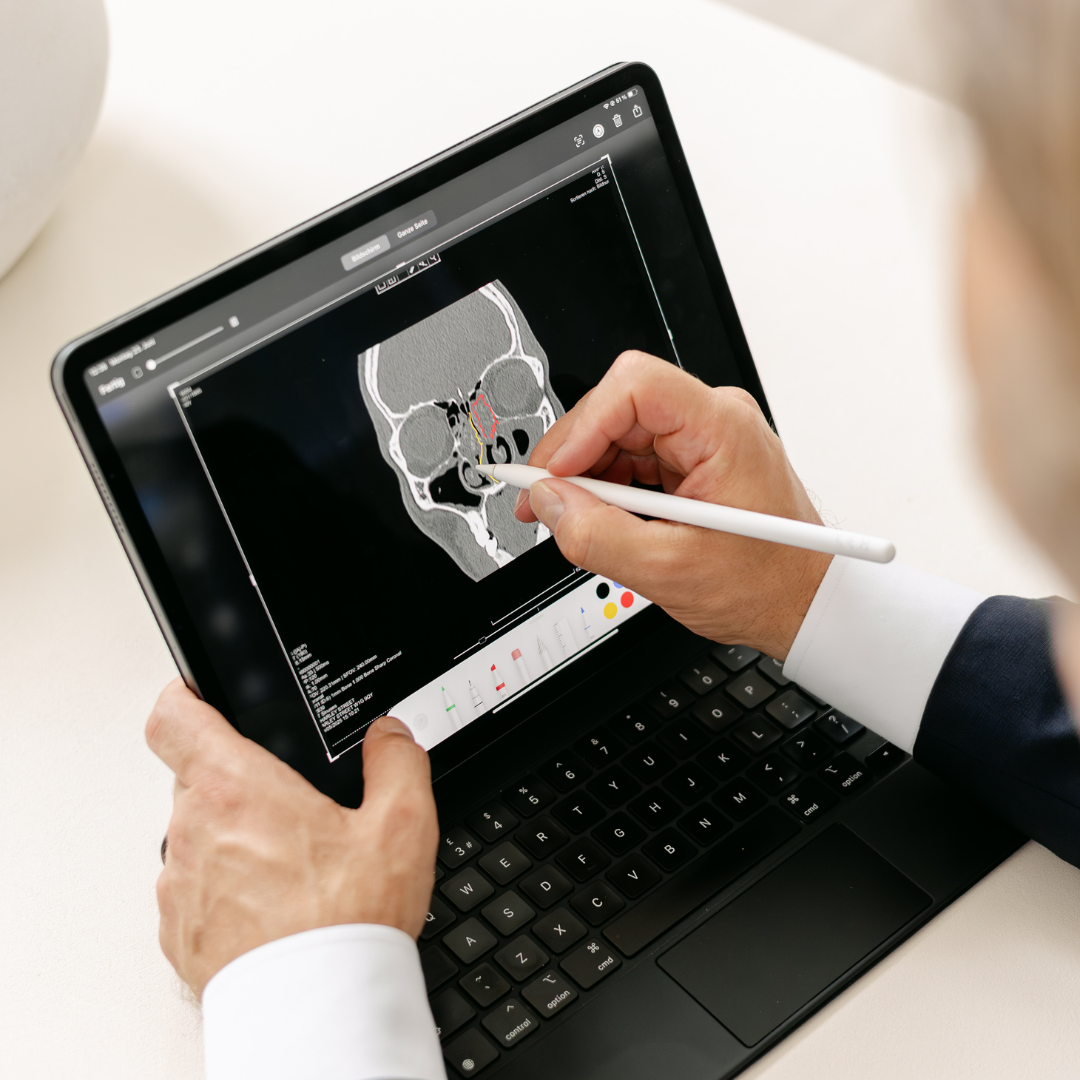
5 Signs Your Nose Is Working Harder Than It Should
Medically reviewed by Mr Florian Bast
Consultant ENT Surgeon and Facial Plastic Surgeon
Professional profiles: LinkedIn | GMC
This article reflects current understanding at the time of publication.

Key Things You Will Learn in This Blog
Why healthy nasal breathing is important for your overall wellbeing
Five common signs your nose may not be functioning properly
What can cause long-term nasal obstruction
When breathing problems may benefit from specialist assessment
How Functional Rhinoplasty and Septorhinoplasty can improve breathing
Most people don't spend much time thinking about how well they breathe through their nose, until something changes. Because breathing happens automatically, it's easy to overlook subtle signs that your nose isn't functioning as efficiently as it should.
Whether caused by a deviated septum, previous injury, allergies, or structural changes within the nose, poor nasal function can affect much more than your breathing. It can influence your sleep, exercise performance, concentration, and even your overall quality of life.
As a Consultant ENT Surgeon and Facial Plastic Surgeon specialising in Functional Rhinoplasty, Septorhinoplasty, and Rhinology, Mr Florian Bast regularly treats patients who have adapted to breathing difficulties without realising that structural problems within the nose may be limiting their breathing. In many cases, these issues can be improved through specialist assessment and carefully planned nasal surgery.
In this blog, we'll explore five common signs that your nose may be working harder than it should, what could be causing these symptoms, and when specialist nasal surgery may be appropriate.
Why Healthy Nasal Breathing Matters
Your nose does much more than simply allow air into your lungs. It filters dust and allergens, warms and humidifies the air you breathe, and helps regulate airflow before it reaches your lungs.
When the nose isn't functioning properly, your body often compensates without you even noticing. Over time, this extra effort can leave you feeling tired, congested, or short of breath.
In some patients, simple medical treatment may be enough to improve symptoms. However, where the underlying cause is structural, procedures such as Functional Rhinoplasty or Septorhinoplasty may provide a long-term solution by restoring healthy airflow.
1. You're Constantly Breathing Through Your Mouth
One of the clearest signs that your nose may not be functioning properly is relying on your mouth to breathe, particularly during the day or while sleeping.
Many patients assume this is normal, but persistent mouth breathing often suggests that airflow through the nose is restricted.
This may be caused by:
A deviated septum
Enlarged turbinates
Nasal polyps
Previous nasal trauma
Structural collapse of the nose
Many of these conditions affect the structure of the nose and cannot always be corrected through medication alone. Identifying the underlying cause is the first step in determining whether surgical treatment could help restore normal breathing.
2. You Always Feel Blocked on One Side
Do you constantly feel as though one nostril is blocked?
Although it's normal for airflow to alternate slightly between nostrils throughout the day, ongoing blockage on one side is not.
Persistent one-sided nasal blockage may indicate:
A deviated nasal septum
Swelling inside the nose
Previous injury
Nasal obstruction
If symptoms continue for several weeks, it's worth having them assessed. Where the blockage is caused by a structural issue such as a deviated septum or previous injury, Septorhinoplasty may help restore airflow while maintaining the natural appearance of the nose.
3. You Snore or Wake Feeling Tired
Poor nasal airflow doesn't just affect breathing while you're awake.
When breathing through the nose becomes difficult, many people naturally switch to mouth breathing during sleep. This can contribute to:
Snoring
Poor sleep quality
Dry mouth
Feeling tired despite sleeping all night
Where poor nasal airflow is contributing to disrupted sleep, improving the nasal airway can often make a noticeable difference to sleep quality, energy levels, and overall wellbeing.
4. Exercise Feels Harder Than It Should
If you struggle to breathe through your nose while walking, running, or exercising, your nose may not be delivering air efficiently.
Many active patients adapt without realising it, assuming they're simply "out of shape."
Restricted airflow can make exercise feel more demanding because your body has to work harder to get enough air. If the cause is structural, improving nasal airflow through Functional Rhinoplasty or Septorhinoplasty may help patients breathe more comfortably during physical activity.
5. You've Simply Got Used to It
Perhaps the most common sign is that you've gradually adapted.
Patients often tell Mr Bast:
"I've always breathed like this."
or
"I thought everyone had one blocked nostril."
Because many nasal problems develop gradually, or follow an injury years earlier, people often don't realise how much their breathing could improve until the underlying problem is identified and treated.
What Could Be Causing These Symptoms?
Several structural conditions can affect how well your nose functions, including:
Deviated septum
Nasal valve collapse
Previous nasal fractures
Structural weakness following injury
Less commonly, enlarged turbinates or chronic inflammation may also contribute.
Identifying the exact cause is important because treatment depends on what is preventing the nose from functioning efficiently. A detailed assessment allows the underlying problem to be diagnosed so that the most appropriate treatment plan can be recommended.
When Should You Seek Specialist Advice?
If you've experienced ongoing nasal blockage, difficulty breathing through your nose, or symptoms that affect your sleep, exercise, or quality of life, it may be time to seek specialist advice.
Many people assume these symptoms are something they simply have to live with, but that isn't always the case. Where breathing difficulties are caused by structural problems within the nose, Functional Rhinoplasty or Septorhinoplasty may offer a long-term solution by improving both breathing and nasal support.
How Can Treatment Help?
Treatment depends entirely on the underlying cause. While some conditions can be managed without surgery, structural problems often require specialist nasal surgery to restore normal function.
Depending on your individual needs, treatment may include:
Functional Rhinoplasty
Septorhinoplasty
Nasal valve reconstruction
Correction following nasal trauma
The aim is always to improve nasal breathing while preserving the natural appearance, strength, and long-term stability of the nose.
Mr Florian Bast a Facial Plastic Surgeon in London

Mr Florian Bast is a Consultant ENT Surgeon and Facial Plastic Surgeon with decades of experience specialising in Functional Rhinoplasty, Septorhinoplasty, Rhinology, and complex nasal reconstruction. His practice is dedicated to helping patients breathe more comfortably while achieving natural, balanced results that preserve the long-term strength and function of the nose.
By combining specialist expertise in nasal surgery with an in-depth understanding of nasal anatomy, Mr Bast takes an individualised approach to every patient. Whether breathing difficulties are caused by injury, a deviated septum, or structural collapse, his focus is on identifying the underlying problem and providing long-term solutions that improve both function and quality of life.
Key Takeaways
Persistent mouth breathing, one-sided blockage, poor sleep, and difficulty exercising can all be signs that your nose is not functioning as well as it should.
Many people adapt to breathing difficulties without realising that structural problems within the nose may be the cause.
Functional Rhinoplasty and Septorhinoplasty can improve breathing where structural issues are affecting airflow.
A specialist assessment can identify the underlying cause and determine the most appropriate treatment.
Improving nasal function can have a positive impact on breathing, sleep, exercise, and overall quality of life.