Rebuilding the Nose After Sports-Related Trauma: A Professional Rugby Player’s Rhinoplasty Case Study
Medically reviewed by Mr Florian Bast
Consultant ENT Surgeon and Facial Plastic Surgeon
Professional profiles: LinkedIn | GMC
This article reflects current understanding at the time of publication.
What You’ll Learn in This Article
How repeated sports trauma affects nasal structure
How to tell if you have a broken nose or nasal injury
Why crooked and non-symmetrical noses often worsen over time
When nose surgery for a broken nose may be required
What recovery looks like after broken nose surgery
Repeated sports injuries can have a lasting impact on the nose, both structurally and functionally. In high-impact contact sports such as rugby, facial trauma is common and, over time, can lead to a crooked or asymmetrical nose, breathing difficulties, and loss of nasal support.
This blog explains how sports-related nasal injuries affect the nose, how to recognise a broken nose or septal problem, when surgery may be needed, and how specialist ENT-led Rhinoplasty can restore both form and function. We then explore a real case study of a professional rugby player treated by Mr Florian Bast, Consultant ENT Surgeon and Facial Plastic Surgeon.
The Impact of Sports Trauma on the Nose
The nose is one of the most vulnerable facial structures in contact sports. While a single fracture may heal, repeated trauma, especially when untreated, can weaken the nasal framework and lead to long-term deformity.
Common consequences include:
A crooked or asymmetrical nose
Collapse of the middle third of the nose
Tip drooping or poor definition
Functional breathing issues
Over time, repeated nasal fractures can alter both the visible shape of the nose and the internal structures that support airflow.
How to Tell If You Have a Broken Nose
A broken nose is not always immediately obvious, particularly for athletes accustomed to playing through pain. However, untreated injuries can heal incorrectly and cause ongoing problems.
Common broken nose symptoms include:
Pain or tenderness over the nasal bones
Swelling or bruising around the nose and eyes
A nose that appears crooked or not symmetrical
Difficulty breathing through one or both nostrils
A sensation that one nostril is always congested
Many patients ask ‘how to tell if your nose is broken’ or ‘how to know if you fractured your nose.’ If your nose is not symmetrical, breathing has worsened, or the shape has changed after impact, this may indicate a nasal fracture, septal deviation, or early nostril collapse.
While some broken noses can heal on their own, fractures that heal poorly may lead to collapsed nose cartilage, persistent deviation, and long-term breathing difficulty. Assessment by an ENT Specialist is essential following sports-related injuries.
Crooked Noses, Septal Deviation and Nasal Collapse
A crooked or asymmetrical nose is rarely just a surface concern. Following trauma, deeper structures such as the nasal septum and supporting cartilage can shift, fracture, or weaken, leading to progressive structural change. Patients may notice increasing nasal deviation, uneven nostrils, or early nostril cartilage collapse, as well as breathing more easily through one nostril than the other.
A septal deviation is particularly common after injury and may cause persistent nasal blockage, uneven airflow, or difficulty breathing during exercise. In these cases, nose surgery for a broken nose or Septorhinoplasty may be required to restore both structural support and effective nasal airflow.
Case Study: A Professional Rugby Player
Mr Florian Bast treated a professional rugby player who had sustained multiple nasal injuries throughout his career. Over time, repeated trauma significantly altered both the appearance and structural integrity of his nose.
Assessment Findings
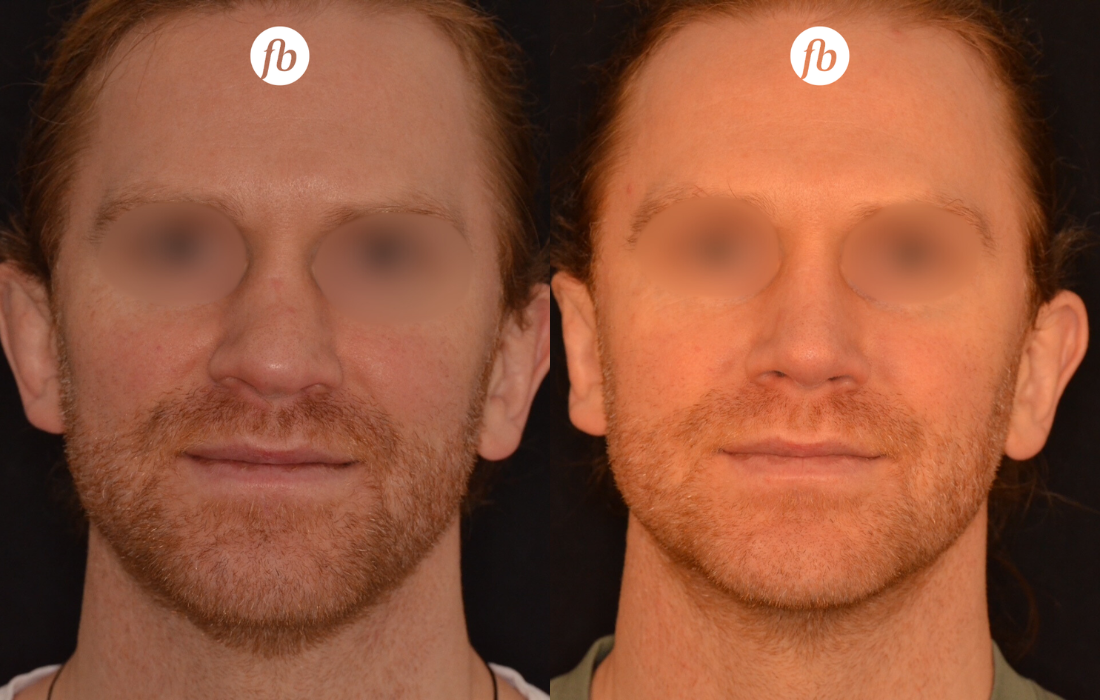
During consultation, Mr Bast carried out a detailed nasal and facial assessment, examining the nose from frontal and profile views, alongside internal support and airflow.
Key findings included:
A very broad nasal dorsum caused by repeated trauma
A depressed upper and middle third, visible on side profile
A slightly hanging, droopy nasal tip due to weakened cartilage support
Together, these features created an unbalanced appearance and contributed to both aesthetic and functional concerns.
Treatment Approach: Rebuilding the Framework
In trauma-related Rhinoplasty, the goal is not simply to refine the appearance of the nose, but to rebuild the underlying framework for long-term stability.
For this patient, Mr Bast focused on:
Rebuilding the collapsed middle third
Restoring dorsal height and straightness
Improving tip support and definition
Creating a balanced result suited to an athletic male face
This structural approach ensured both facial harmony and improved nasal function.
Results and Outcomes
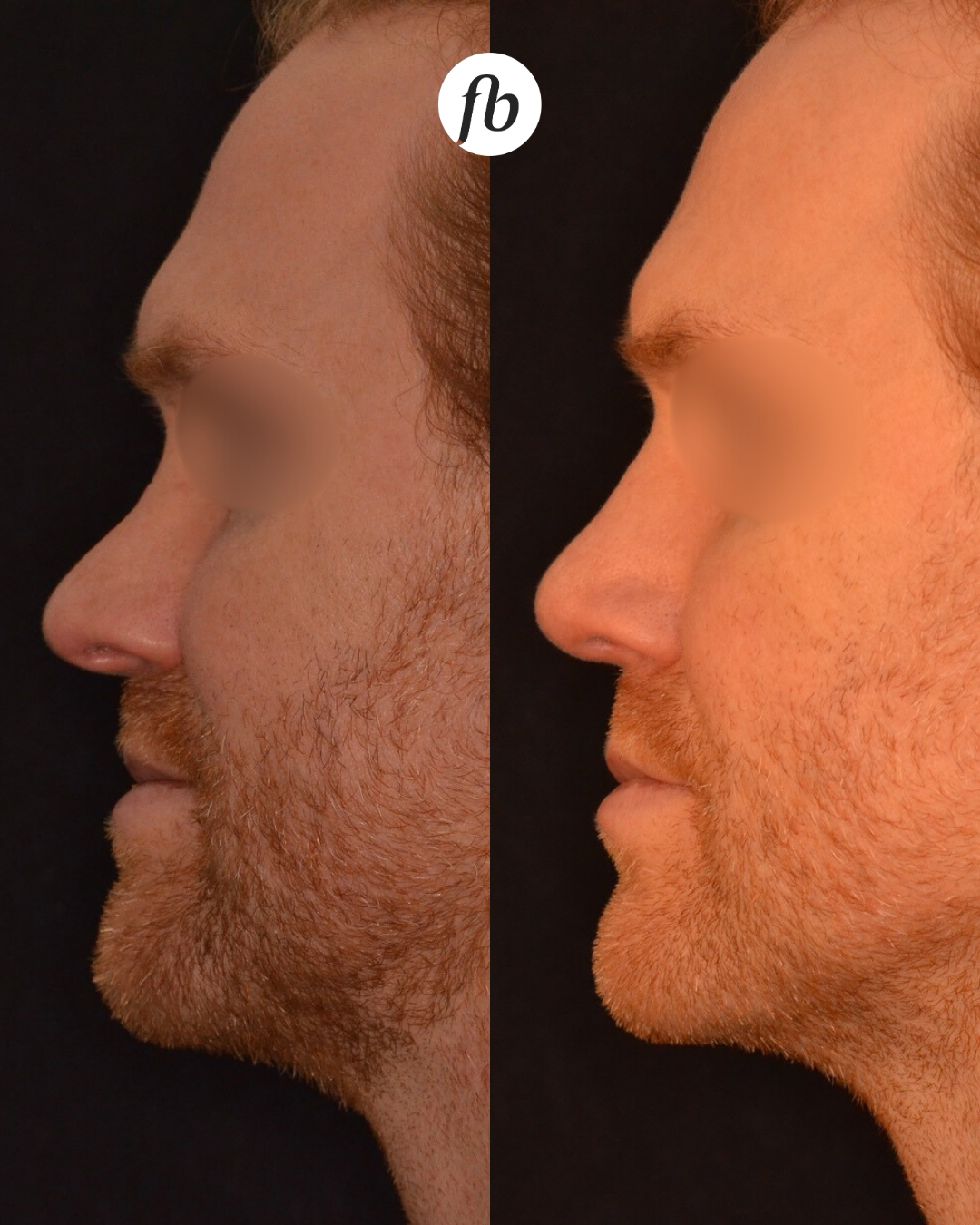
Following surgery, the results were subtle yet transformative.
Key outcomes included:
A straighter nasal profile
A more defined nasal tip
Successful reconstruction of the middle third
A nose that is now balanced and proportionate to the face
The final result appears natural and stable, complementing the patient’s features rather than drawing attention.
Broken Nose Surgery and Recovery Time
A common question is how long does it take a broken nose to heal.
Minor nasal fractures may heal within 2–3 weeks
More complex fractures often take 6–8 weeks
Full healing and refinement after broken nose surgery continues over several months
Recovery time varies depending on injury severity and whether Rhinoplasty or Septorhinoplasty is required. Swelling settles gradually, and results continue to refine as tissues stabilise.
Considering Rhinoplasty After a Sports Injury?
If you have sustained nasal injuries through sport and are concerned about a crooked nose, breathing difficulties, or ongoing nasal collapse, a specialist ENT consultation can help you understand your options.
Mr Florian Bast a Facial Plastic Surgeon in London

Mr Florian Bast is recognised for his expertise in Functional, Reconstructive, and Revision Rhinoplasty, particularly in the management of trauma-related and sports-induced nasal deformities. Patients choose Mr Bast for his dual expertise in ENT and Facial Plastic Surgery, combining a deep understanding of nasal function with advanced aesthetic precision.
He has extensive experience treating broken noses, nasal fractures, septal deviation, and structural collapse, and is known for delivering natural, long-term results. His approach is highly individualised and anatomy-led, ensuring that each patient’s outcome is balanced, stable, and tailored to their unique facial features.